
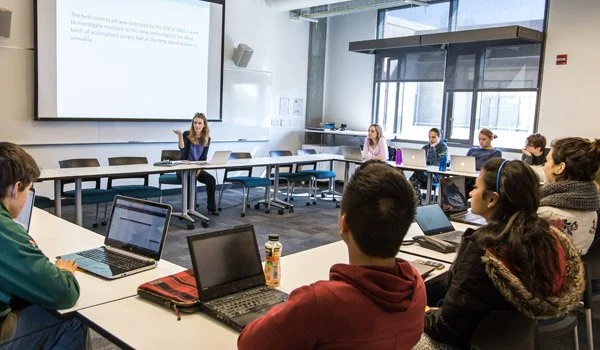
Managed GPU Lab Packs for University, College, Trade & High-School Teaching
Canadian-hosted JupyterLab environments for CUDA, AI, data science and computational science.
Give students hands-on access to GPU computing without purchasing, installing or managing a dedicated GPU teaching laboratory.
myresearchcloud.ca GPU Lab Packs provide managed, browser-based computing environments for universities, colleges, trade and technical programs, and high schools. Students receive preconfigured JupyterLab environments with CPU, memory and shared NVIDIA GPU resources ready for coursework.
Institutions pay a predictable per-student, per-term price rather than purchasing infrastructure around peak classroom demand or managing variable public-cloud consumption.
GPU Computing Built for Teaching
Teaching workloads are different from sustained research workloads. Students typically use GPU resources in bursts during laboratories, assignments, demonstrations and project work rather than consuming a dedicated accelerator continuously.
GPU Lab Packs are designed around that teaching model. GPU resources are shared across the class while each student receives a managed notebook environment with defined CPU, system memory and GPU memory resources.
Browser-Based
Students connect through a standard web browser using a managed JupyterLab environment.
No local CUDA installation or specialized student workstation is required.
GPU Accelerated
NVIDIA GPU capacity supports CUDA, PyTorch, CuPy, Numba, machine learning and GPU-accelerated scientific computing.
Resources are allocated specifically for instructional use.
Managed for the Course
Course environments can be prepared around instructor requirements before the academic term begins.
Students focus on coursework rather than infrastructure setup.
GPU Lab Pack Pricing
Choose the Lab Pack that matches the course. Pricing is fixed per student for the academic term, making GPU infrastructure straightforward to include in departmental budgets, teaching grants, course fees and institutional planning.
| Lab Pack | GPU | GPU Memory | CPU | System RAM | Environment | Academic Price |
|---|---|---|---|---|---|---|
| GPU Lab Pack 2 | NVIDIA A2 | Up to 2 GB | Up to 4 vCPU | Up to 8 GB | Managed JupyterLab | $99 / student / term |
| GPU Lab Pack 4 | NVIDIA A2 | Up to 4 GB | Up to 8 vCPU | Up to 16 GB | Managed JupyterLab | $199 / student / term |
| GPU Lab Pack 8 | NVIDIA L4 | Up to 8 GB | Up to 12 vCPU | Up to 24 GB | Managed JupyterLab | $399 / student / term |
Standard course deployments have a 10-student minimum. Smaller pilots, workshops and specialized teaching environments can be discussed separately. All prices are in Canadian dollars and applicable taxes are additional.
No hourly GPU billing. No student credit cards. No requirement for students to create and manage individual public-cloud accounts.
The institution knows the cost of the GPU teaching environment before the course begins.
GPU Lab Pack 2
GPU Lab Pack 2 is designed for introductory GPU computing and courses where students are learning acceleration concepts rather than running large AI models or memory-intensive applications.
Each active teaching environment can receive up to 2 GB of NVIDIA A2 GPU memory, up to 4 vCPU and up to 8 GB of system RAM.
Typical Uses
- Introduction to CUDA programming
- GPU computing fundamentals
- Numba and CuPy exercises
- Introductory PyTorch
- Small neural-network exercises
- Numerical methods
- Parallel computing demonstrations
- Scientific visualization
- Introductory computational physics
- Engineering and technology labs
GPU Lab Pack 4
GPU Lab Pack 4 provides additional GPU memory, CPU and system RAM for general AI, machine-learning and computational-science teaching.
Each active teaching environment can receive up to 4 GB of NVIDIA A2 GPU memory, up to 8 vCPU and up to 16 GB of system RAM.
Typical Uses
- AI and machine-learning laboratories
- PyTorch and TensorFlow coursework
- Computer vision
- Image processing
- Computational physics
- Engineering simulation
- Scientific machine learning
- Data science
- GPU-accelerated numerical computing
- Intermediate CUDA programming
GPU Lab Pack 8
GPU Lab Pack 8 is the advanced teaching tier. It combines significantly more GPU memory with additional CPU and system RAM for upper-year, graduate-level and computationally demanding coursework.
Each active teaching environment can receive up to 8 GB of NVIDIA L4 GPU memory, up to 12 vCPU and up to 24 GB of system RAM.
Lab Pack 8 uses NVIDIA L4 GPU infrastructure and is intended for courses that need more GPU memory and substantially greater accelerator performance than introductory teaching environments.
Typical Uses
- Advanced artificial intelligence
- Transformer and generative-AI instruction
- Advanced computer vision
- Natural-language processing
- Scientific machine learning
- Advanced computational physics
- Computational engineering
- Larger neural-network models
- GPU performance and optimization courses
- Upper-year and graduate computational laboratories
Choose the Right Lab Pack
| Lab Pack 2 | Lab Pack 4 | Lab Pack 8 | |
|---|---|---|---|
| GPU | NVIDIA A2 | NVIDIA A2 | NVIDIA L4 |
| GPU Memory | Up to 2 GB | Up to 4 GB | Up to 8 GB |
| CPU | Up to 4 vCPU | Up to 8 vCPU | Up to 12 vCPU |
| System RAM | Up to 8 GB | Up to 16 GB | Up to 24 GB |
| Primary Focus | GPU fundamentals | AI and computational science | Advanced AI and computation |
| Academic Price | $99 / student / term | $199 / student / term | $399 / student / term |
What Every Lab Pack Includes
- Managed browser-based JupyterLab environment
- NVIDIA GPU acceleration
- Defined GPU memory allocation
- CPU and system memory allocation
- CUDA toolkit
- Python scientific computing environment
- PyTorch support
- TensorFlow support where required
- NumPy, SciPy and Matplotlib
- CuPy and Numba support
- Course-specific notebook and software images
- Persistent student notebook storage
- Canadian-hosted infrastructure
- Platform monitoring and infrastructure support
Course-specific software can be incorporated into the teaching environment where licensing and technical requirements permit. Complex custom application environments may require additional professional services.
How a GPU Lab Pack Works
Before the course begins, the instructor and myresearchcloud.ca establish the expected class size, software environment, GPU tier, teaching schedule and any course-specific dataset requirements.
1. Define the Course
Select the Lab Pack tier, class size, expected software stack, datasets and instructional schedule.
2. Prepare the Environment
The course environment is configured and tested before student access begins.
3. Students Connect
Students sign in through a browser and launch their assigned JupyterLab environment.
Scheduled instructional periods are used for capacity planning so appropriate resources are available when the class needs them most.
Additional access outside scheduled teaching periods can be provided on a shared, best-effort basis according to the course deployment.
One Platform, Many Courses
GPU Lab Packs are not limited to AI courses. The same managed Jupyter environment can support computational teaching across science, engineering, technology and computing programs.
AI & Data Science
Machine learning, deep learning, data science, computer vision, natural-language processing and applied AI.
Physics & Science
Computational physics, numerical methods, astronomy, statistical mechanics, simulation, scientific computing and data analysis.
Engineering & Technology
CUDA programming, robotics, automation, computer vision, numerical modelling and GPU-accelerated engineering applications.
Designed for Instructors
GPU teaching infrastructure can create significant work before students ever run their first program.
Faculty and technical staff may otherwise need to install CUDA, reconcile software versions, maintain drivers, manage user accounts, troubleshoot student laptops and estimate cloud consumption.
GPU Lab Packs move those infrastructure responsibilities into a managed teaching environment.
- Consistent software environment for the entire class
- No dependency on student laptop GPU capability
- No local CUDA installation required
- No individual public-cloud accounts required
- No student credit cards
- No per-hour billing administration
- Centralized course environment
- Course-level capacity planning
- Canadian data residency
Designed for Academic Procurement
Lab Pack pricing is designed to be straightforward for departments, schools and institutions to budget.
Instead of purchasing GPU workstations for every student or managing unpredictable public-cloud consumption, institutions can establish the cost of the teaching environment directly from class enrolment.
| Example Course | Students | Lab Pack 2 | Lab Pack 4 | Lab Pack 8 |
|---|---|---|---|---|
| Small Course | 10 | $990 / term | $1,990 / term | $3,990 / term |
| Medium Course | 20 | $1,980 / term | $3,980 / term | $7,980 / term |
| Large Course | 30 | $2,970 / term | $5,970 / term | $11,970 / term |
Examples show standard published pricing before applicable taxes. Larger classes, multiple courses and institution-wide teaching requirements can be discussed as part of an academic services agreement.
GPU Lab Packs vs. Dedicated Research GPUs
GPU Lab Packs and dedicated research GPU services are designed for different workloads.
| GPU Lab Packs | Dedicated Research GPU | |
|---|---|---|
| Designed For | Courses, labs and instructional programs | Research and sustained computational workloads |
| Access | Managed JupyterLab | Dedicated research environment |
| GPU | Shared teaching-optimized GPU capacity | Dedicated physical GPU |
| GPU Memory | Up to 2 GB, 4 GB or 8 GB | Full physical GPU memory |
| Usage Pattern | Scheduled and burst-oriented | Persistent and sustained |
| Pricing | Per student / term | Per GPU / month or reserved project block |
Research projects requiring a complete physical GPU, persistent environments, full GPU memory or continuous workloads should use our Academic & Institutional GPU Infrastructure service.
Canadian-Hosted Academic Infrastructure
GPU Lab Packs run on infrastructure hosted in Canadian datacentres and operated in Canada.
The service is designed for educational institutions that want practical GPU teaching capacity without depending on student-owned hardware or building and maintaining a dedicated institutional GPU laboratory.
- Canadian data residency
- Canadian-operated infrastructure
- Predictable academic pricing
- No student payment accounts
- No data-egress charges
- No capital GPU laboratory purchase required
- Capacity can scale with course enrolment
Pilots and Course Development
Institutions considering GPU Lab Packs can begin with a pilot, workshop or individual course before expanding to additional departments, schools or programs.
Pilot deployments can be used to validate course material, student workflows, software requirements, GPU sizing and expected classroom concurrency.
Once the environment has been validated, the same course images and teaching model can be reused for future terms and expanded across additional courses.
Pricing & Service Notes
- All prices are in Canadian dollars.
- Applicable taxes are additional.
- Standard Lab Pack pricing is per enrolled student per academic term.
- Standard course deployments have a 10-student minimum.
- GPU resources are shared and optimized for instructional workloads.
- GPU Lab Packs are not dedicated GPU virtual machines.
- Scheduled instructional periods are established with the instructor for capacity planning.
- Additional access outside scheduled instructional periods may be provided on a shared, best-effort basis.
- Course-specific software and datasets should be identified before the teaching environment is finalized.
- Complex custom environments, application engineering and specialized integration may require separately quoted professional services.
- Dedicated GPU research infrastructure is available separately for sustained research workloads.
Bring GPU Computing Into the Classroom
Tell us about your course, expected enrolment, software requirements and teaching schedule.
We can help determine the appropriate GPU Lab Pack and prepare the environment for an upcoming course, workshop or pilot.
Discuss a GPU Lab Pack